

 Share
ShareYou top up at a licensed UK casino, pick PayPal, and the deposit fails. No fraud alert, no message from the bank, nothing on the cashier screen beyond a line suggesting you try another method. Most players shrug and reach for a debit card.
What actually happened is a piece of 2020 regulation doing its job three steps upstream of the button you just pressed.
The part of the credit card ban nobody read
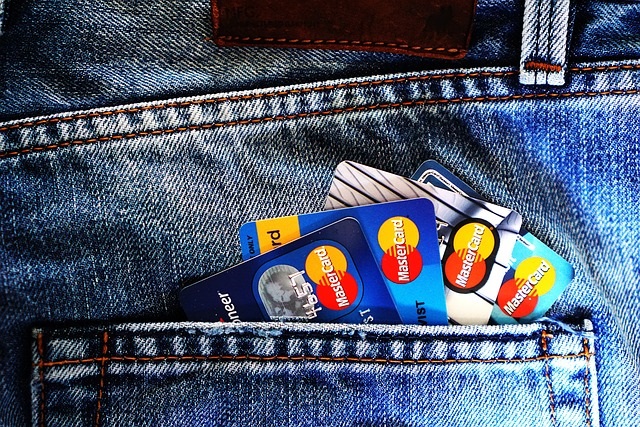
On 14 April 2020 the Gambling Commission stopped operators letting consumers in Great Britain gamble with credit cards. That much was reported everywhere. Licence condition 6.1.2 entered the LCCP, and online betting, casino and bingo sites, high street and track bookmakers, and lotteries taking payment online or by phone all had to stop
accepting credit cards for gambling.
What got almost no coverage is what the Commission did next, which was to follow the money one hop further. Its guidance extends the ban to payments made by credit card through any money service business, meaning e-wallets, fintechs and e-money institutions. The reasoning is stated openly. One of the Commission's key intentions was "to maximise the levels of friction during the process of accessing and using borrowed funds for gambling".
The obligation that creates is blunter than most players realise. Operators must satisfy themselves that customers of a given wallet cannot fund that wallet with a credit card and then gamble with the proceeds. Where a wallet has not built a block to prevent exactly that, the guidance tells operators to reject every payment coming through it.
So a UK casino does not get to offer an e-wallet and hope for the best. Either the wallet has solved the credit card problem, or the casino turns the wallet off.
Why the wallet became the enforcement point
PayPal has never treated gambling as ordinary commerce. Its published policy prohibits gambling transactions unless the business at the other end is an approved gambling seller, and approval is not a form-filling exercise. Sellers have to demonstrate to PayPal's satisfaction that they can block account holders in the United States and in any jurisdiction where the activity may be illegal. The definition PayPal applies is wide, and it names poker specifically, "whether or not it is considered a game of skill in the gambler's jurisdiction".
Set that against the Commission's rule and you get two separate permissions, granted by two organisations for unrelated reasons. A UKGC licence says a site may lawfully take your money. PayPal approval says PayPal has agreed to move it. Neither implies the other, and the public licence register only tracks the first.
That is why the wallet turns up at one cashier and not at another between two operators that look identical on paper, and why it pays to check which PayPal casinos actually take the method rather than assuming they all do. A like-for-like comparison of the ones that do beats opening fifteen banking pages in turn, though on any site you have not used before the licence register is still the thing to check first.
Availability also moves. Approval can be granted, reviewed and withdrawn, and none of that is announced to players, so a method that worked in March can be gone by September with nothing changed on the operator's licence. Why any particular site loses it is almost never made public, which is why most of what circulates in player forums about a given operator is guesswork.
What it looks like from the cashier
A PayPal payment is not one thing. It draws on a balance, a linked bank account, or a linked card, in an order PayPal decides unless you override it. An approved gambling merchant still has to respect the funding rule, so the credit card sitting in your wallet is not an eligible source for that specific payment even though it works everywhere else you shop. A deposit that fails with no explanation is frequently this rather than a fraud block, and trying a different casino will not fix it.
The same logic removes PayPal's own credit products from the cashier. Pay in 3 and PayPal Credit are consumer credit, and consumer credit is what the 2020 rule exists to keep away from gambling. Their absence at a UK casino is not a gap in the operator's integration.
The rule follows the wallet onto plastic, too. The Commission's guidance covers card payment instruments issued by the wallet to its own customers, so a wallet-branded debit card is not a way round anything. Whatever route the money takes out of the account, the operator is still expected to know that a credit card was not the original source of it.
Withdrawals inherit the constraint from the other direction. Most licensed sites return winnings to the method used for the deposit, so how a deposit was funded quietly decides the route a payout takes and how long it sits in transit. Deposit by card and the payout goes back to the card. Deposit through the wallet and it comes back to the wallet, where it may sit behind a second set of checks before it reaches a bank account.
Poker players hit this earlier than casino players do. Moving a balance between a room, a wallet and a bank account is a weekly habit rather than an occasional one, and a single wallet used across several rooms means several separate approvals all have to hold at the same time. Lose one and the balance is not gone, but the route out of it changes, usually at the least convenient moment. It is also why players who keep money parked in a wallet between sessions notice a withdrawn approval faster than players who fund a deposit and forget about it.
Calling any of this PayPal being awkward misreads who is holding the rule. A payment company is carrying a compliance obligation it did not write, in a market where the regulator has said plainly that it wants friction in the path of borrowed money.
The block that runs the other way
There is a second reason the wallet sits in the middle of UK gambling policy, and it has nothing to do with deposits failing. PayPal built a gambling block into UK accounts years ago, a switch the account holder can flip to stop gambling payments leaving at all. HighStakesDB covered the Gamban integration behind it when it launched.
That block reaches a layer GAMSTOP does not. Self-exclusion closes accounts at licensed operators. It does nothing about unlicensed sites, and it cannot stop a payment leaving your account. A wallet-level or bank-level block can, which is part of why the Commission's work on protections for vulnerable players has kept drifting toward the payment rails rather than staying with the operator.
Which leaves the wallet doing considerably more than moving money. It holds an approval the operator cannot grant itself, it enforces a funding rule written by a regulator it does not answer to, and the account holder can switch the whole thing off from inside the app. When a deposit fails, one of those three is usually the reason, and none of them are the casino.
Anyone who would rather not make that call in the moment can turn on the wallet and bank blocks described here, or talk to GambleAware or GamCare on 0808 8020 133. UK players must be 18 or over.