
 Share
Players don't always remember who made a game, but they often remember how it felt.
A certain art style, a particular kind of animation or an unusual way of handling progression can become so recognizable that a studio starts to develop its own design fingerprint. You can see that in everything from RPGs and card games to casual titles and hacksaw gaming slots, where the provider's visual style and recurring mechanics help its catalog feel connected even when individual games look very different.
That kind of identity is difficult to build. It usually comes from repetition without simply making the same game over and over.
Players Learn a Studio's Habits
Think about a developer whose games you've played for years.
You may start recognizing certain patterns before consciously thinking about them. Perhaps its menus are unusually clean. Maybe character animations have a specific weight to them, or combat tends to emphasize timing rather than raw stats. Some studios become known for dense systems, while others make games that can be understood almost immediately.
Those habits create expectations.
That can be useful for players. If one game from a particular developer clicks, checking the rest of its catalog becomes a reasonable shortcut. You already have some idea of how that studio approaches design.
It works the other way too. A player who dislikes a studio's usual pacing or presentation may be less interested in its next release, even if the setting changes completely.
Visual Style Does More Work Than People Realize
Artwork isn't just decoration.
Before someone understands a progression system, combat loop or bonus mechanic, they've already seen the interface. Color, animation and character design establish a mood almost immediately.
This becomes especially important in crowded categories.
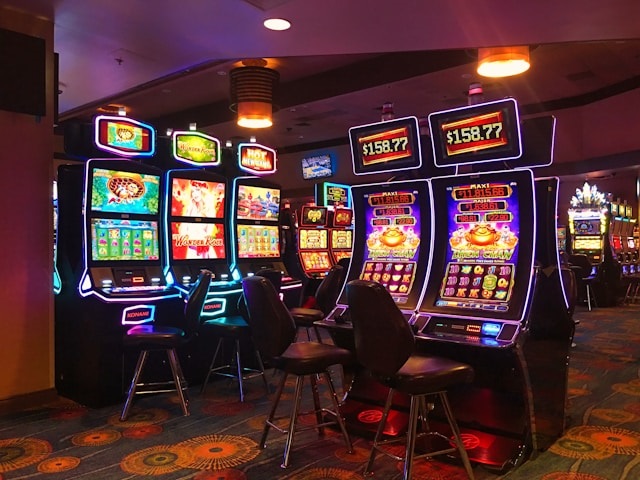
Card games have to distinguish themselves from dozens of other card games. Action RPGs need to look recognizable in screenshots. Slot-style games face a similar challenge because the basic reel format is familiar before the player even opens a title.
Hacksaw Gaming is a useful example. Its current Zula Casino catalog includes games such as Le Bandit, Spinman, Twisted Lab and Wanted Dead or a Wild. The themes range from cartoon crime to comic-book imagery and stranger science-fiction territory, yet the provider is known for bold visuals and mechanics that go beyond a traditional-looking slot layout.
The subject matter changes. The design attitude is easier to recognize.
Mechanics Can Become Part of the Brand
Studios also develop reputations through the systems they return to.
For competitive games, that might mean elaborate build crafting or unusually technical movement. A collectible card game studio may favor resource systems that encourage long-term planning. Live-service developers can become known for the pace at which they introduce events and new characters.
Casual games have their own signatures.
Hacksaw, for instance, uses mechanics such as cascading reels, dynamic multipliers and its Win Anywhere system across parts of its portfolio. The exact combination varies by title, but recurring ideas give players something familiar to latch onto.
That's a delicate balance.
Repeat a mechanic too literally and the catalog starts to feel recycled. Abandon everything that made previous games distinctive and the studio loses part of its identity.
The better approach is often to keep a recognizable foundation while changing how the pieces interact.
Familiar Doesn't Have to Mean Predictable
Sequels make this tension obvious.
Players often want a follow-up to preserve what they liked while also justifying its existence. Change too much and people complain that it no longer feels like the original. Change too little and they wonder why a new game was necessary.
Studios working across separate titles face the same problem on a larger scale.
A consistent UI philosophy, recognizable animation style or preference for certain mechanics can provide continuity without forcing every game into one template.
You can see this across major gaming genres. Some publishers have entire catalogs where the games look unrelated at first glance, yet players can still identify the developer after spending a little time with them.
That recognition has value.
Provider Names Become Discovery Tools
Once players learn those patterns, the studio name itself becomes a way to find new games.
People already do this with RPG developers, fighting-game studios and card-game publishers. The same behavior makes sense in large casual-game libraries, where sorting by provider can be more useful than scrolling through hundreds of unrelated titles.
If one Hacksaw title appeals to you, for example, browsing the provider's collection exposes you to games built by the same studio without requiring them to share the same theme. Zula's current Hacksaw section groups those titles together for exactly that kind of discovery.
Genre tells you broadly what kind of experience you're opening.
The studio often tells you how that experience is likely to be built.